In a film elective for 10th through 12th graders, students study a century of cinema, then make their own commercials, public service announcements and silent films.
FERNDALE, Mich. — Students in University High School’s Movie Making class spent the fall learning how movies were made more than 100 years ago. Then they picked up cameras and made their own, with no dialogue allowed.
Movie Making is an elective for students in grades 10 through 12 that pairs film history with hands-on filmmaking. Taught by English language arts teacher Ryan Kleven, the course enrolls about 60 students across two sections this year. Over the semester, students study different eras of film while producing their own commercials, silent films, music videos, stop-motion animation and more.
“Film has always been a passion of mine, and when the opportunity came up to teach a new elective, I jumped at the chance to bring cinema into the classroom,” Kleven said. “I wanted to design a course that moves students past passive viewing so they can start looking at film through a critical lens.”
The class opened the year with commercials. Working in groups, students wrote, filmed and edited ads for products including a mechanical pencil, an energy drink and a baby camera. Kleven’s favorite from that unit was a public service announcement about the dangers of drunk driving.
Next came silent film. Before filming, students spent several weeks studying silent comedies by Charlie Chaplin and Buster Keaton. They learned the exaggerated acting style silent performers used to show emotion, the basics of physical and slapstick comedy, and how intertitles, the text cards between scenes, explain key plot points. They also learned that theaters often performed music and sound effects live during the silent era, or added them later when the films were released on television and video.
For the project, groups of three or four students made a silent film three to five minutes long. The most important rule was to tell the whole story without dialogue. Each film had to use exaggerated acting, intertitles to clarify the story and music that fit its genre. Groups had five class periods to film and two class periods to edit.
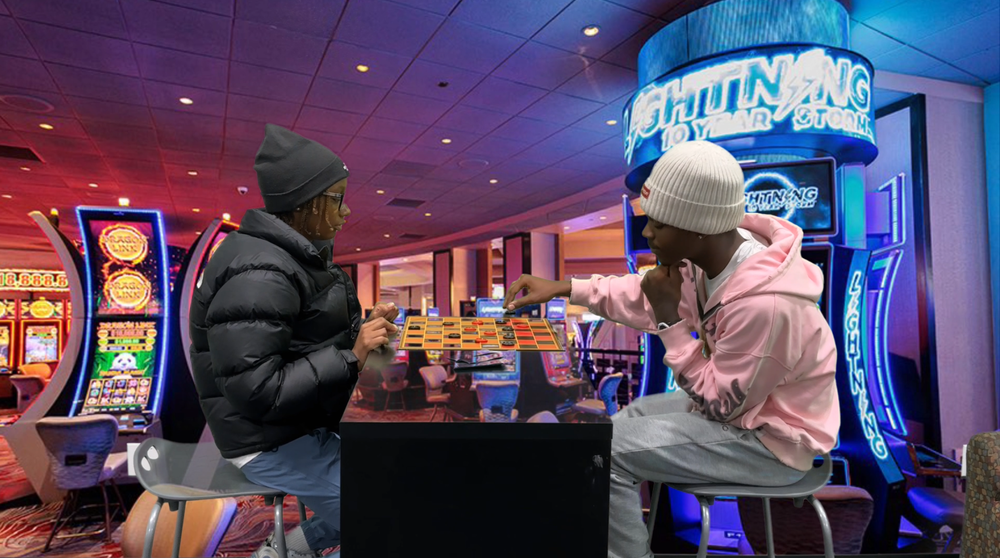
Because the unit wrapped up in October, many groups made spooky films. Kleven’s favorite this year was “The Abandoned School,” created by Joshua Epperson, Aaron Holland, Sydney Johnson and Trey’shon McGee-Bell. He pointed to the film’s use of music and sound effects, its exaggerated silent-style acting, its creative cinematography and a simple story that is easy to follow with the help of intertitles.
“One thing I enjoyed about making silent movies was the exaggerated movements and acting,” said Epperson, a senior. “I would love to make another one. I like doing the projects in this class because we get to move around and film for a few days. Lots of creative freedom.”
“I think this class is great and really enjoyable,” said McGee-Bell. “I learned that silent films can still tell just as much of a story as movies with vocal acting. And it was a very intriguing time learning the different editing techniques for my silent film.”
Kleven said what surprised him most was how fully students embraced the silent film style. “Without dialogue, they rely entirely on visual storytelling, and their expressive acting and physical comedy were fantastic,” he said. “I was also impressed by how many groups cleverly used green screen tech to create more ambitious films. Seeing them combine 1920s cinema techniques with modern tools was awesome.”
He added that students often tell him they enjoyed watching the films in the unit, all of which are black and white and more than 100 years old.
Up next, students will study the Hollywood studio system from the 1920s through the 1960s, including the artists employed behind the scenes, how studios treated movie stars under the star system, and how censorship under the Hays Code shaped what studios produced. For a design thinking project, students will create their own movie studio that meets a need missing from today’s market. Their prototypes could include a pitch to investors, trailers for movies their studio might produce or a miniature model of their studio lot.
“My ultimate hope for this class is that students leave with a genuine, lifelong passion for cinema,” Kleven said. “Beyond just watching movies, I want them to walk away with a richer appreciation for film history and a real understanding of the incredible craftsmanship, collaboration and artistry required behind the scenes to bring a story to life on screen.”
Watch “The Abandoned School” on YouTube.
About Ferndale Public Schools
Founded in 1887, Ferndale Public Schools serves approximately 3,100 students from the communities of Ferndale, Pleasant Ridge, Oak Park, Royal Oak Township and portions of Hazel Park. The district provides a comprehensive educational experience from early childhood through high school, offering rigorous academics, innovative learning opportunities, award-winning arts and athletics, career and technical education, and comprehensive social-emotional supports. Recognized for its commitment to equity, inclusion and student-centered learning, Ferndale Public Schools empowers every student to discover their potential, achieve academic success and become engaged members of their communities.
To learn more about Ferndale Public Schools, visit the website. To stay up to date on district news, events and announcements, visit the News page.